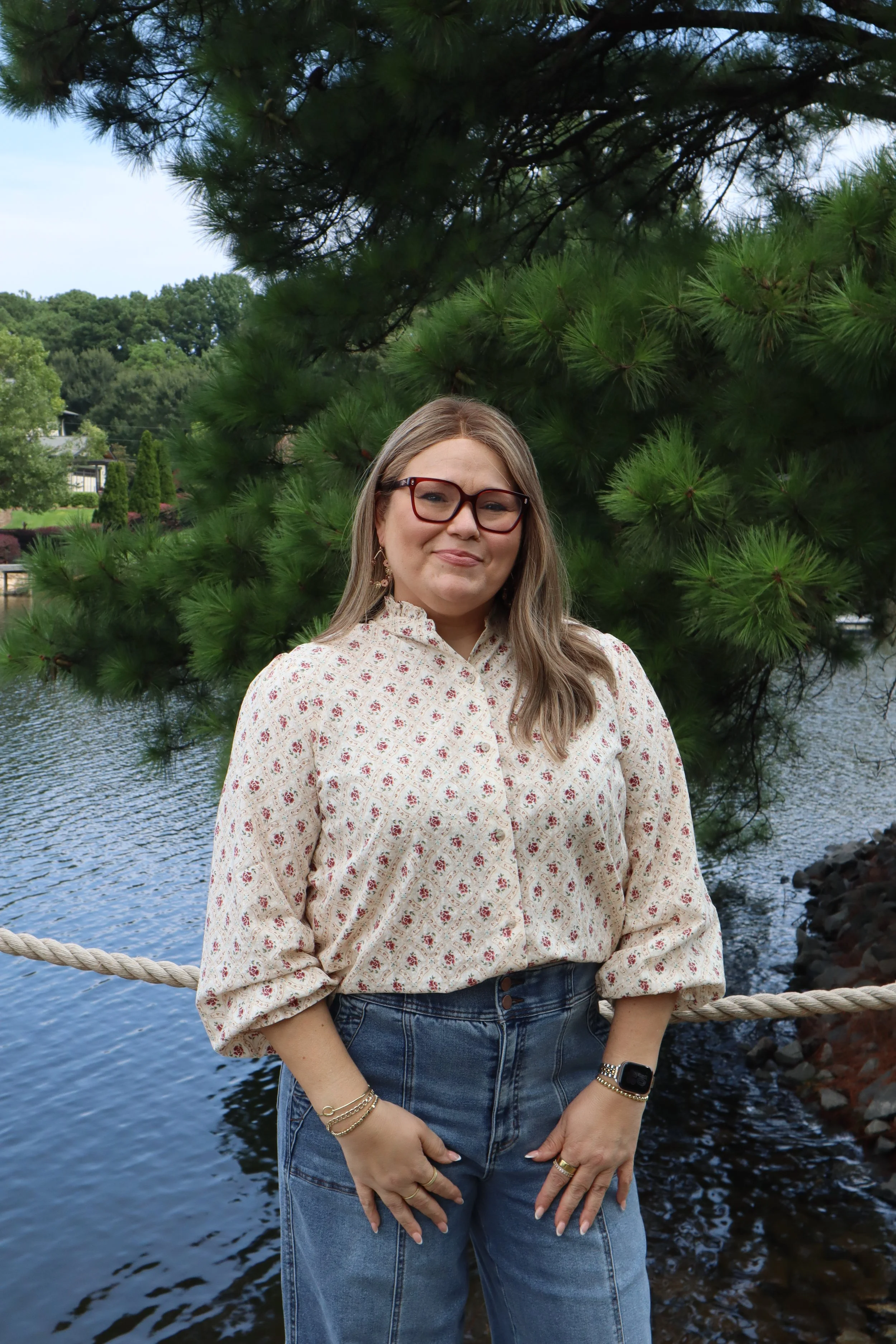
A Message From The Owner —
“As Clementine Holistic grows, I want every practitioner who joins us to understand something I’ve learned throughout my career: the person comes before the diagnosis. Listening comes before deciding. Effective care begins with taking the time to understand what is really happening.”
Robin Tallent, PMHNP-BC
You are more than what brought you into the room.
Mental health care can become very focused on identifying what's wrong.
A diagnosis.
A list of symptoms.
A medication.
A number on a screening tool.
Those things can be important. But they don't tell the whole story.
Robin believes the person experiencing the symptoms matters just as much as the symptoms themselves.
What has been happening in your life?
What changed?
How long have you felt this way?
What does it look like when you're at home, at work, in your relationships, or alone?
What have you already tried?
What do you wish someone had asked you sooner?
Her approach begins there.
Before We Decide What You Need, We Want to Understand What’s Happening.
Robin doesn't believe in rushing a woman toward an answer simply because an appointment needs to end with one.
Sometimes the picture is clear.
Sometimes it isn't.
Sometimes symptoms that look like one thing have another layer underneath them.
Sometimes several things are happening at once.
And sometimes a woman has spent years adapting to how she feels because she assumed it was simply how she was supposed to be.
Not having an answer yet doesn't mean there isn't more to understand.
Robin takes the time to ask questions, listen for patterns, and understand the circumstances surrounding what you're experiencing before determining what kind of care makes sense.
A Diagnosis Is Information. It Isn't Your Identity.
A diagnosis can give language to an experience.
It can explain patterns that once felt confusing. It can open doors to treatment and support.
But a diagnosis shouldn't become the entire description of a person.
You are still a woman with a history, relationships, responsibilities, experiences, strengths, disappointments, changes, and a life happening around the symptoms that brought you in.
Robin's 25 years in nursing have shaped the way she sees this distinction. She has learned that there is rarely a single explanation for what a person is experiencing, and that understanding the person behind the immediate concern matters.
The goal isn't simply to name what's happening. It's to understand what it means for you.
Your Life Is Part of the Clinical Picture.
Mental health doesn't happen in a vacuum.
Sleep matters.
Relationships matter.
Physical health matters.
Hormonal changes matter.
Work matters.
Parenthood matters.
Loss matters.
Trauma matters.
Major transitions matter.
The demands you've been carrying for years matter.
That doesn't mean every difficulty has a psychological explanation.
It means context matters when we're trying to understand a person.
A woman experiencing anxiety after a major life change may need something different from a woman who has lived with anxiety since childhood.
A woman struggling to focus may need a different conversation depending on what else is happening with her sleep, mood, stress, responsibilities, and daily functioning.
A woman experiencing changes during postpartum or perimenopause deserves to have those changes considered within the larger picture of her life.
The symptom is where the conversation starts. It doesn't have to be where it ends.
Treatment Should Be a Conversation.
Robin doesn't believe women should feel like treatment decisions are simply made for them.
She believes you should understand:
What are we treating?
Why do we think this is happening?
What are my options?
What are the benefits and limitations of each?
What happens if I do nothing right now?
What should we watch for?
What comes next?
Sometimes medication may be appropriate.
Sometimes another approach makes more sense.
Sometimes the first step is gathering more information.
And sometimes the most useful thing a provider can do is help a woman finally understand what she has been experiencing.
Good psychiatric care doesn't require you to hand over your decision-making.
It should give you better information with which to make decisions.
We Care About What Changes Outside the Appointment.
The goal isn't to create a perfect version of you.
It's to help you function better in the life you already have.
Maybe that means being able to concentrate at work.
Getting your sleep back on track.
Feeling less overwhelmed by ordinary responsibilities.
Having more patience with the people you love.
Getting through a major transition without feeling completely lost.
Understanding your emotions instead of constantly questioning them.
Or simply recognizing yourself again.
The question isn't only, “Are your symptoms better?”
It's also:
“Is your life becoming easier to live?”
Sometimes Feeling Better Starts With Understanding Yourself.
Mental health care isn't about changing who you are.
It's about understanding what you're experiencing well enough to decide what you want to do about it.
Robin wants women to leave care with more than a treatment plan.
She wants them to have clarity.
To understand why certain patterns may be showing up.
To recognize what is within their control.
To know what support is available.
And to feel more confident about what comes next.
Why This Matters at Clementine
This is also where Robin's work connects to the larger philosophy behind Clementine.
Mental health and physical health are treated by different professionals for good reason. Each requires its own training, judgment, and scope of practice.
But the woman receiving that care is the same woman.
She doesn't stop being a person with a body when she walks into a psychiatric appointment.
And she doesn't stop having an emotional life when she walks into a bodywork session.
We don't need to pretend these are the same field to acknowledge that they can affect the same life.
At Clementine, we want different areas of expertise to exist alongside one another without asking any one practitioner to become responsible for everything.
When appropriate, and with the woman's consent, that can create opportunities for greater context and better-informed care.
Different disciplines. Different expertise. One woman at the center.
Robin's Philosophy in One Sentence
Listen long enough to understand the person before deciding what the person needs.
That is the heart of Robin's approach.
Not rushing to label.
Not reducing a woman to a diagnosis.
Not assuming the first explanation is the complete explanation.
Listening. Asking. Understanding. Then deciding what comes next.
You Don't Have to Figure It All Out Before You Come In.
You don't need to arrive knowing what's wrong.
You don't need the right diagnosis.
You don't need to have your symptoms neatly organized.
You don't even need to know what kind of help you need.
You just need to be willing to start the conversation.
Robin can help you make sense of what you're experiencing and determine what comes next.